EYS TCM Clinic

Covid-19 in TCM’s Point of View

heart
Covid-19 in TCM’s Point of View

Over the past thousands of years of Chinese history, TCM has battled against hundreds of plagues that led to the accumulation of effective treatments and prevention methods to alleviate the symptoms experienced. Coronavirus disease (COVID-19) as we experience today, is also classified as a “plague”.

Unlike a common flu that is caused by common pathogenic factors (e.g. wind, cold, heat, humidity, dryness and fire), plague is often associated with dampness and toxin pathogens. Currently, the clinical observations in China have shown that COVID-19 is commonly caused by the interactions of dampness, toxin, heat, and stasis, of which dampness being the most dominate pathogenic factor.

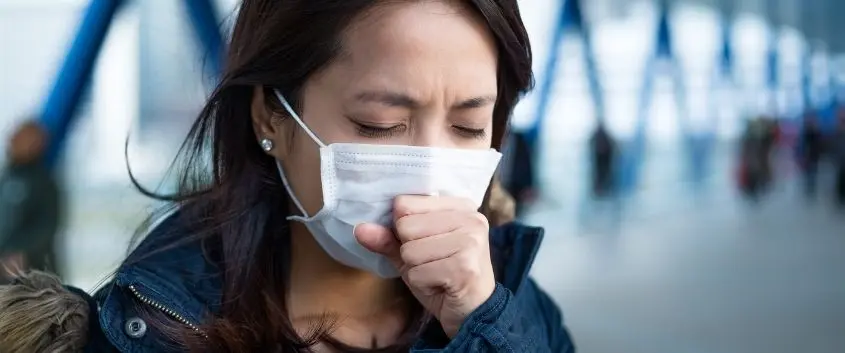
For mild to moderate stages of COVID-19, the common symptoms observed are low fever, tiredness, dry cough, muscle ache, nausea or diarrhea. The common syndrome is “lung with dampness toxin retention” and hence the TCM treatment principle is to eliminate exterior pathogens, heat and dampness, detoxify and invigorate the spleen.

Why do some people have it worst then? This is because COVID-19 is a disease that presents itself in different stages. For the critical stages, the toxin further attacks the lung and heart, at worst blocking the vital organ’s function and resulting in the collapse of yang qi in the body. This results in high fever, shortness of breath, unconsciousness, multiple functional failure and shock. The treatment principle at this critical stage aims to ventilate lung qi, remove heat to restore consciousness and to recuperate the yang qi.

Here are some tips to help with your recovery from Covid-19.
Do:
consume smaller meal portions at the beginning and slowly increase portion as your appetite returns.
Start off with food that are easy to digest, for example diluted porridge.

Incorporate other nutritious food as you regain appetite, such as thicker porridge, fish meat and chicken soup.

Tips: To remove excess dampness and strengthen your spleen, you can boil lotus leaves in water first and use this water to later cook your porridge. You can also add Chinese barley (薏苡仁), Chinese yam (山药), lotus seed (莲子), tangerine peel (陈皮) and Qian Shi (芡实) into your diet too.

Don’t:
over-consume cold and raw food such as fruits and salads, spicy and oily food as it will trap dampness and further burden your spleen and stomach.

Sources: https://cmjournal.biomedcentral.com/articles/10.1186/s13020-020-00375-1


Related Articles

Drug-free Pain Management

Understanding Common Types of Pain

Many individuals who visit our Eu Yan Sang TCM Physicians experience discomfort in the neck, shoulders, and spinal region. These areas are especially vulnerable because of poor posture when standing, sitting, or carrying heavy items. Over time, such habits can lead to muscular strain, imbalance, and eventually chronic aches.

We also support patients with acute injuries arising from sports or accidental falls. When an injury appears severe, our Physicians will refer the individual to a Western doctor for further assessment. For less serious cases, TCM treatments can help enhance the body’s natural healing process.

How Pain Arises

From a TCM perspective, pain often stems from two key causes: obstruction and deficiency. 

  1. Disrupted qi and blood flow, or 

  2. deficiency in qi, blood, the liver, or the kidney, 

may give rise to sensations such as swelling, piercing discomfort, aching, tightness, or cold and warm types of pain.

Pain can occur in any part of the body. At Eu Yan Sang, our Physicians support pain-related conditions linked to nerve or soft tissue issues through acupuncture, scraping, tuina, and cupping. These methods often yield positive outcomes. For conditions such as fractures, bone spurs, or severe muscle or ligament tears, patients may require additional medical evaluation.

TCM Pain Management Options

At Eu Yan Sang, our Physicians can offer various TCM approaches to help individuals manage pain effectively.

  • Acupuncture: On top of pain relief, it provides a wide range of benefits and supports overall wellness.

  • Scraping: Suitable for milder discomfort

  • Cupping: For deeper or more persistent aches.

  • Tuina: Helps relax tense muscles and improve joint mobility. 

Building on this approach, our physicians also integrate Electromagnetic Therapy via the Super Inductive System (SIS) to provide more comprehensive pain support.

By applying targeted electromagnetic fields to the nerves and muscles, this therapy helps disrupt pain signals, relax tense muscles, and improve qi and blood circulation. When used alongside acupuncture, it further enhances meridian stimulation, supporting more effective pain relief and recovery.

Lifestyle Adjustments to Support Healing

While receiving TCM support, it is essential to stay physically active. Gentle movement and stretching help keep the muscles flexible and reduce the likelihood of recurring discomfort. However, overexertion should be avoided, as it may worsen symptoms.

In TCM, pain is often linked to poor circulation or blood stagnation around the affected area. Eu Yan Sang’s approach focuses on promoting qi and blood flow, relaxing the muscles and soothing the nerves through herbal medication and physical therapies.

Diet's role in pain management
Incorporating certain foods may help ease discomfort naturally:

  • Ginger / Indian Curry / Chili Padi
    These contain turmeric, which may help reduce discomfort. Menstruating women may find ginger tea with brown sugar helpful in easing menstrual pain.

  • Omega-3
    Deep-sea fish rich in Omega-3 are known to support inflammation relief, rheumatism, arthritis, and migraines.

  • Coffee
    Coffee may temporarily lessen discomfort by influencing pain receptors. This is most effective for those who do not drink coffee regularly.

  • Berries / Cherries
    Strawberries, cherries, and blackberries have anti-inflammatory properties similar to aspirin. They also support the immune system and help soothe aches.

Ready to Support Your Wellness Journey
If persistent aches are affecting your daily life, our Eu Yan Sang Physicians are here to help you find relief and restore balance from a TCM perspective.

Book an appointment today and take the first step towards better comfort, better mobility, and better well-being.


Acupuncture and expert consultation can help:

  • Increase circulation to get your energy flowing again

  • Stimulate meridians & restore balance within your body

  • Alleviate pain & feel good again

    What is Acupuncture?​

    Acupuncture, involves the insertion of thin needles into specific points on the body to stimulate energy flow and promote healing. It’s a time-tested practice with roots dating back thousands of years, renowned for its ability to alleviate various forms of pain and restore harmony within the body.

    How Can Acupuncture Help You?

    Increase Circulation: By targeting key points, acupuncture enhances blood flow, aiding in the delivery of oxygen and nutrients to tissues and organs. Say goodbye to stagnation and hello to revitalisation!

    Restore Balance: TCM operates on the principle of balancing the body’s vital energy, or ‘Qi’. Acupuncture helps to unblock meridians, ensuring smooth energy flow and promoting overall well-being.

    Alleviate Pain: Whether you’re dealing with chronic discomfort or acute aches, acupuncture offers targeted relief. From migraines to muscle tension, our physicians tailor treatments to address your specific needs, providing effective and lasting pain management.

    World Health Organization (WHO) Endorsement

    In 2003, the World Health Organization (WHO) recognised acupuncture as an effective form of treatment for 28 diseases, symptoms, or conditions and identified 64 indications where acupuncture could be beneficial. These include but are not limited to:

    • Headaches

    • Neck Pain

    • Knee pain

    • Low back pain

    • Sprain

    • Sciatica

    • Rheumatoid arthritis

    • Tennis elbow


    Article reviewed by: 

    Physician Dylan Soo

    TCM Physician at Eu Yan Sang TCM Clinic

Boosting Your Child’s Immunity with TCM

Parents often despair – with good reason – that their school-going children not only catch whatever’s going around, but pass it on quite indiscriminately to siblings and playmates.

As was the case with Ms Winifred Ling, whose two-year-old daughter, Olivia, got sick “almost every month” for a year after she started going to nursery.

“She mostly had colds,” Ms Ling, a psychologist practicing in Singapore, recalls. “She would have a runny nose, lots of phlegm, and would be coughing quite a lot. Sometimes, when she had a hacking cough, she would end up vomiting.” “We would take her to see a paediatrician and she would be alright for a while after taking the prescribed medication, but then she would catch the next virus going around.”

Eventually, Ms Ling took her daughter to see a Traditional Chinese medicine (TCM) practitioner who focused as much on resolving Olivia’s symptoms as on boosting her immune system. Olivia was managed with herbs and paediatric tui na, a form of massage therapy that promotes the smooth flow of qi (a person’s vital force) in the body. Together, the treatments not only eliminated the pathogens that caused Olivia’s illness but also strengthened her overall constitution.

“She is five now, and we have continued our regular TCM visits and treatments as they help keep her healthy,” Ms Ling says.

Smoothing out the energy flow

Olivia’s case is not uncommon among children, whose immune systems are still developing and are susceptible to environmental allergens and diseases.

TCM practitioners believe that children have relatively weaker lung, kidney and spleen systems, which can compromise their overall immunity.

“A weak lung system increases the likelihood of respiratory illnesses, while a weak spleen system makes one prone to digestive illnesses,” says Eu Yan Sang physician Quek Yiyan. “That’s why children often catch colds and have stomach upsets.”

In TCM, healthy qi defends against external pathogens. When the flow of qi in organs is not optimal, their delicate yin-yang balance is disturbed. In managing children, TCM practitioners therefore focus on strengthening or restoring the flow of qi, particularly around these vulnerable systems. The objective is to keep the body in a balanced yin-yang state, says Physician Quek.

Like running water in a stream, Qi cannot afford to be stagnant, “If an organ is colonised by bacteria, such an invasion can be imagined as a brackish pond,” she says. “The organ then has to be ‘cleansed’ and the proper flow of qi re-established.”

Re-establishing the flow of Qi can be done using different therapies, including herbal medication, paediatric tui na, or by making adjustments to diet or lifestyle.

A natural way

Herbs are an important cornerstone of TCM treatment and have a variety of effects, such as warming, cooling and strengthening (increasing qi). Although the types of herbs prescribed to children are similar to those prescribed to adults, the dosage and specific formulas depend on the child’s condition, age and weight. This is why a trained and licensed TCM practitioner should always be consulted, Physician Quek says.

Paediatric tui na is also an effective treatment for young children. A trained paediatric physician uses specialized massage techniques to stimulate acupoints that are specific to children, enhancing the flow of qi throughout their body.

Other TCM treatments like acupuncture and cupping are generally not recommended before adolescence. However, a physician may decide on them on a case-by-case basis.

TCM treatments offer a safe and reliable alternative with few side effects, an important consideration for parents keen to ensure the health of their children. Should a child fall sick, TCM also focuses on solving the root cause of the illness, not just the symptoms.

Better habits for stronger immunity

TCM practitioners generally advocate a holistic – and sustainable – approach to building a strong immune system. Besides prescribing herbal medication, tui na, and acupuncture for older children, physicians are likely to also advise on an appropriate diet and lifestyle.

Cold drinks and too much fried, sweet or spicy food should be avoided as they create “dampness” in the body, Physician Quek says. “Excessive amounts of these foods weaken the digestive function of the spleen and stomach, which in turn allows dampness to accumulate,” she explains. Accumulated dampness can, over time, cause blockages and illness. Regular mealtimes should also be observed, as this helps with proper digestion.

Herbs that help increase Qi can be added to soups or stir-fries. These include Poria (Fuling, 茯苓), White Atractylodes (Baizhu, 白术), Euryale seeds (Qianshi, 芡实), Coix barley (Yiyiren, 薏苡仁), Astragalus root (Huangqi, 黄芪) and Chinese yam (Huaishan, 淮山). Chinese yam, in particular, can be consumed daily as a food supplement as it helps improve digestion, Physician Quek says.

Herbs with strengthening properties should not be given to a child who is already ill as “these herbs could strengthen the invading pathogen instead, and make expelling it more difficult”, she cautions.

Qi Strengthening Soup

Ingredients:

  • Astragalus root (Huangqi, 黄芪) 10g

  • White Atractylodes (Baizhu, 白术) 10g

  • Licorice root (Gancao, 甘草) 5g

  • Pork ribs 500g

  • Water 1L

Quantities can be varied to individual liking


Preparation:

  1. Rinse the herbs and blanch the pork ribs.

  2. Place all ingredients into 1L of boiling water.

  3. Simmer over low heat for three to four hours.

  4. Serve.

Good lifestyle habits should also be practiced. These include getting adequate sleep, having moderate exposure to cold weather to “build up the child’s resistance to external pathogens”, and catching some sun to “help boost yang qi, which is important for a child’s development”.

This holistic approach to strengthening immunity is something Ms Ling appreciates – although it took some effort on her part as well.

“When we first started TCM, my daughter had trouble taking the herbs, but now it’s no longer an issue,” she says. “And happily, she doesn’t fall sick so frequently anymore.”
Natural Rhythm of Yin & Yang in Our Body

Sleep is an essential part of your life. It is not only a form of rest, but a physiological function that helps your body to recharge and perform at its best the next day.

In TCM, sleep is part of the natural rhythm of Yin and Yang in the body. In the concept of Yin-Yang, Yin represents passive forces while Yang represents active forces. TCM classic The Spiritual Axis (Lingshu, 灵枢) uses the Yin-Yang concept to explain sleep in chapter 28. It is said that “when Yang is depleting and Yin is abundant, one’s eyes are closed. When Yin is depleting and Yang is predominant, one is awake.”

Sleep is also believed to be regulated by the cycle of Protective Qi (Wei Qi) and Nutritive Qi (Ying Qi). Protective Qi flows along Yang meridians for 25 rounds during the daytime and circulates through the Yin meridians for another 25 rounds at night. The cycle in the day enables the body to be active and awake, while the cycle at night enables the body to rest and recharge.

Sleep is a part of the Shen activities which function in the day and cease during the night to allow the Heart, Liver, Spleen, Lung and Kidney meridians to rest and recharge. You will be able to sleep well when the Shen is rooted and rested, but your sleep will be affected if the Shen is disturbed.

Ideal Time to Sleep


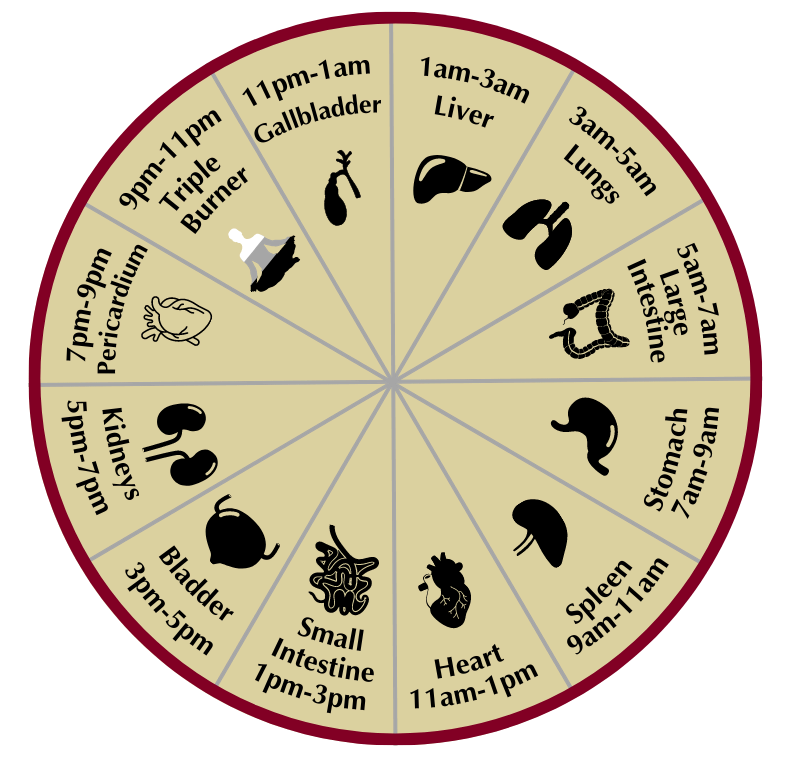
In TCM, Qi flows through 12 principal meridians within the body in a 24-hour cycle. When Qi flows through a specific principal meridian, it takes around 2 hours to vitalise and strengthen the organ system associated to that particular meridian before continuing to subsequent meridians.

The ideal time to sleep in accordance to the meridian clock is by 11pm. If your sleep is disturbed at a certain hour repeatedly, it is an indication that the paired organ system may require your attention.

Oops! There are no articles yet. Please check back again.